 Ultimate guide
A Guide to Holistic Wellness Rituals for Stress Relief
Last Updated: November 21, 2026
Quick Summary
Holistic wellness rituals for stress relief are repeatable practices that work on body and mind at once, such as paced breathing, guided meditation, gentle movement, nature pauses, evening wind-downs and hands-on bodywork. Start with two wellness rituals rather than six, anchoring them to moments you already have, and keep a shortened version for hard days.
- Extend your exhale longer than your inhale to signal the body to downshift.
- Start guided meditation with five minutes and a free audio track.
- Pick the movement option you can complete on your worst day, not your best.
- A ten to fifteen minute nature pause is enough to break mental fatigue.
- Note shoulder tension, sleep speed and completed rituals once a week to track progress.
Table of Contents
- What Holistic Wellness Rituals for Stress Relief Actually Do
- Building a Daily Stress Relief Routine That Fits Your Life
- Breathing Exercises for Relaxation You Can Do at Your Desk
- Guided Meditation for Beginners: Starting Without the Pressure
- Gentle Movement, Nature Pauses, and Hands-On Bodywork
- An Evening Relaxation Routine That Helps You Unwind
- Choosing Rituals by Stress Level, Measuring Progress, and Staying Consistent
- Booking Your First Restorative Session at Gifted Hands Day Spa
- Frequently Asked Questions
What Holistic Wellness Rituals for Stress Relief Actually Do
Holistic wellness rituals for stress relief are repeatable practices that work on body and mind at once, rather than treating tension as purely mental.
Each ritual works on a different channel: breathing shifts your nervous system, a walk shifts your attention, massage shifts the tissue. None is a cure; they give your body repeated, low-pressure signals that it is safe to stand down.
The Body-Mind Connection in Plain Terms
Stress is not just a feeling.
The body-mind connection is the two-way street between that physical state and your thoughts: tense muscles feed anxious thinking, and anxious thinking feeds tense muscles.
If you want a deeper set of techniques for settling that physical state, our guide on how to calm your nervous system naturally walks through breathing, grounding and daily resets step by step.
What the Evidence Supports and What It Doesn't
Slow breathing, gentle movement, time outdoors and structured relaxation are commonly discussed as stress-management tools.
What the evidence does not support is that any single ritual replaces medical care, or that a weekend of self-care undoes months of unrelieved tension. Treat these practices as maintenance, not repair. A common mistake is choosing the most intense option first, then abandoning all of it within a week.
Building a Daily Stress Relief Routine That Fits Your Life
A daily stress relief routine works best when it is small, anchored to something you already do, and adjustable on hard days.
| Ritual | Best Time | Time Needed | What It Helps With |
|---|---|---|---|
| Paced breathing | Mid-morning or before a meeting | 2-5 minutes | Acute tension, racing thoughts |
| Guided meditation | Morning or lunch break | 5-10 minutes | Rumination, focus |
| Gentle movement | Afternoon | 10-20 minutes | Physical stiffness, restlessness |
| Nature pause | Lunch or after work | 10-15 minutes | Mental fatigue, mood |
| Evening wind-down | Before bed | 20-30 minutes | Sleep onset, leftover tension |
| Hands-on bodywork | Weekly or as needed | 60-90 minutes | Chronic muscle tension |
Time Needed
Start with two rituals, not six. A morning breathing practice and an evening wind-down cover the two moments stress hits hardest. Add more only once those two feel automatic.
If you want to understand why slow, deliberate practices tend to stick better than intense ones, our overview of the benefits of slow-paced wellness rituals explains how they build emotional resilience over time.
Breathing Exercises for Relaxation You Can Do at Your Desk
Breathing exercises for relaxation are the fastest-acting ritual available, because they work directly on the nervous system and require no equipment, privacy or change of clothes. The key is extending the exhale: a longer out-breath than in-breath signals the body to downshift.
Try this at your desk:
- Sit with both feet flat on the floor and let your shoulders drop.
- Inhale through your nose for a count of four.
- Hold gently for a count of four.
- Exhale through your mouth for a count of six to eight.
- Repeat for five rounds, then return to normal breathing.
If holding your breath feels uncomfortable, skip the hold and simply make the exhale longer than the inhale. That version is just as effective for most people.
Paced Breathing and the 4-7-8 Method
Paced breathing means matching your breath to a fixed rhythm rather than letting it run on autopilot. The 4-7-8 method is one popular version: inhale for four counts, hold for seven, exhale for eight.
A common mistake is forcing the counts. If seven seconds of holding makes you tense, you have defeated the purpose. Shorten every count proportionally, or drop the hold entirely.
Guided Meditation for Beginners: Starting Without the Pressure
Guided meditation for beginners is simply meditation with someone else's voice doing the pacing, which removes the two things that trip most people up: not knowing what to do and not knowing whether you are doing it right. You sit or lie down, follow the instructions, and when your attention wanders, you bring it back. That return is the practice, not a failure of it.
Start with five minutes and a free audio track. Sit somewhere you will not be interrupted, set a timer so you are not checking the clock, and expect your mind to wander for the first several sessions. It settles with repetition, not effort.
The Main Styles, and Which to Pick First
- Breath-focused meditation anchors attention on the sensation of breathing. It suits acute, buzzy tension and racing thoughts, and pairs naturally with the paced-breathing ritual elsewhere in this guide.
- Body scan meditation moves attention slowly from feet to head, noticing sensation without trying to change it. It suits people who hold stress physically, especially in the jaw, neck and shoulders, and is a common entry point for anyone who finds breath focus too abstract.
- Loving-kindness meditation repeats phrases of goodwill toward yourself and others. It suits irritability, resentment and conflict-driven stress, and is often recommended when tension is more emotional than physical.
A practical starting point is one week of body scan, one week of breath focus, and one week of loving-kindness, then keep whichever you actually completed.
A Five-Minute Session You Can Follow Today
- Sit upright in a chair with both feet on the floor, or lie down if sitting feels restless. Rest your hands wherever they are comfortable.
- Set a five-minute timer and place your phone face down and out of reach.
- Close your eyes or soften your gaze toward the floor.
- Follow the guide's instructions without editing them. If the voice says to notice your shoulders, notice your shoulders rather than deciding they should be lower.
- When you drift into planning or replaying a conversation, name it silently as "thinking" and return to the instruction. Each return is one repetition of the practice.
- When the timer sounds, sit for ten seconds before standing and notice one thing that feels different, even if it is only that your jaw is less clenched.
Watch out: the most common beginner error is treating a busy mind as evidence that meditation does not work for you. A wandering mind is the normal starting condition, and the noticing-and-returning is the entire exercise.
Apps, Free Tracks and What to Look For
You do not need a subscription to start. Once you have a track that fits your routine, you can pair it with simple Alternative Medicine practices to make stress relief feel more grounded in everyday life.
If you have a history of trauma, dissociation, or a condition your clinician is actively treating, mention meditation to them before starting, particularly before longer or silence-based sessions.
Common Friction Points and Fixes
- You keep falling asleep. Meditate earlier in the day, sit rather than lie down, and keep the room lights on.
- You cannot sit still. Try a walking meditation: slow laps around a room while following a guided audio track, which counts as the same practice.
- You feel more anxious mid-session. Open your eyes, shorten the session, and switch to an external anchor such as sounds or the feeling of your feet on the floor.
Gentle Movement, Nature Pauses, and Hands-On Bodywork
Gentle movement, time outdoors and professional bodywork all work on stress through the body rather than the mind, and they stack well: a short walk outside covers movement and nature in one go. None requires athletic ability. A slow walk, a few minutes of stretching, or simply standing outside between meetings all count.
Gentle Movement: Three Concrete Options
- The ten-minute walk. Ten to twenty minutes at a conversational pace, ideally after a meal or in the mid-afternoon slump. The benefit comes from the rhythm and change of scene more than the distance, so a loop around the block counts.
- A five-minute desk stretch sequence. Stand, roll your shoulders back five times, tilt your head ear to shoulder for twenty seconds per side, clasp your hands behind your back and open your chest for twenty seconds, then do five slow standing forward folds. This targets the neck, chest and upper back where desk work concentrates tension.
- Chair-based movement. For limited mobility or shared workspaces, seated marching (one minute), seated spinal twists (ten per side), and ankle circles (ten per direction) move the body without floor space or a change of clothes.
A common pattern is that people choose an ambitious routine, do it twice, and stop. Pick the option you can complete on your worst day, not your best.
Nature Pauses: What Counts and How Long
A nature pause does not require a hike or a park. Ten to fifteen minutes outdoors, even on a sidewalk with a few trees, is enough to break the indoor attention loop that drives mental fatigue. Two practical versions:
- The lunch break outside. Eat outside or take a ten-minute walk after eating. Leave your phone in your pocket for the first five minutes and deliberately notice three things: the temperature, one sound, and one color.
- The after-work decompression pause. Before going inside, stand outside for five minutes and do nothing purposeful. This creates a buffer between work mode and home mode that many people otherwise skip entirely.
For people in shared living spaces or with caregiving responsibilities, a windowsill with the window open, or a few minutes on a balcony or front step, serves the same function. The point is a change of sensory environment, not wilderness.
Hands-On Bodywork: What It Reaches and What to Expect
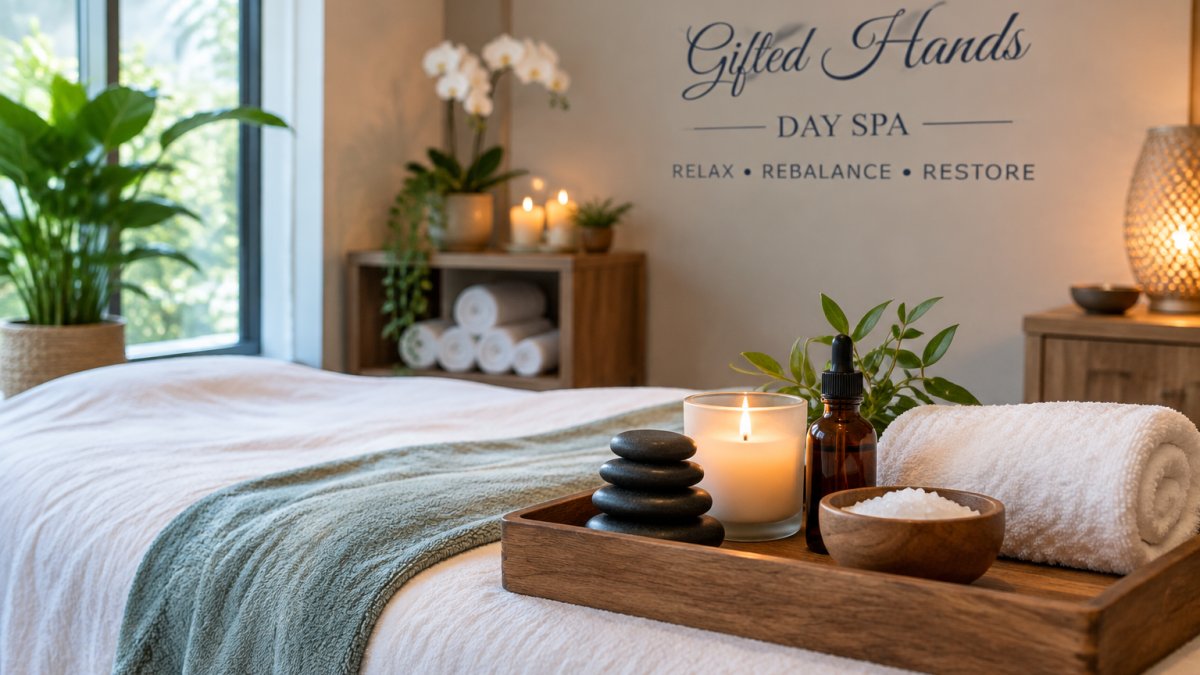
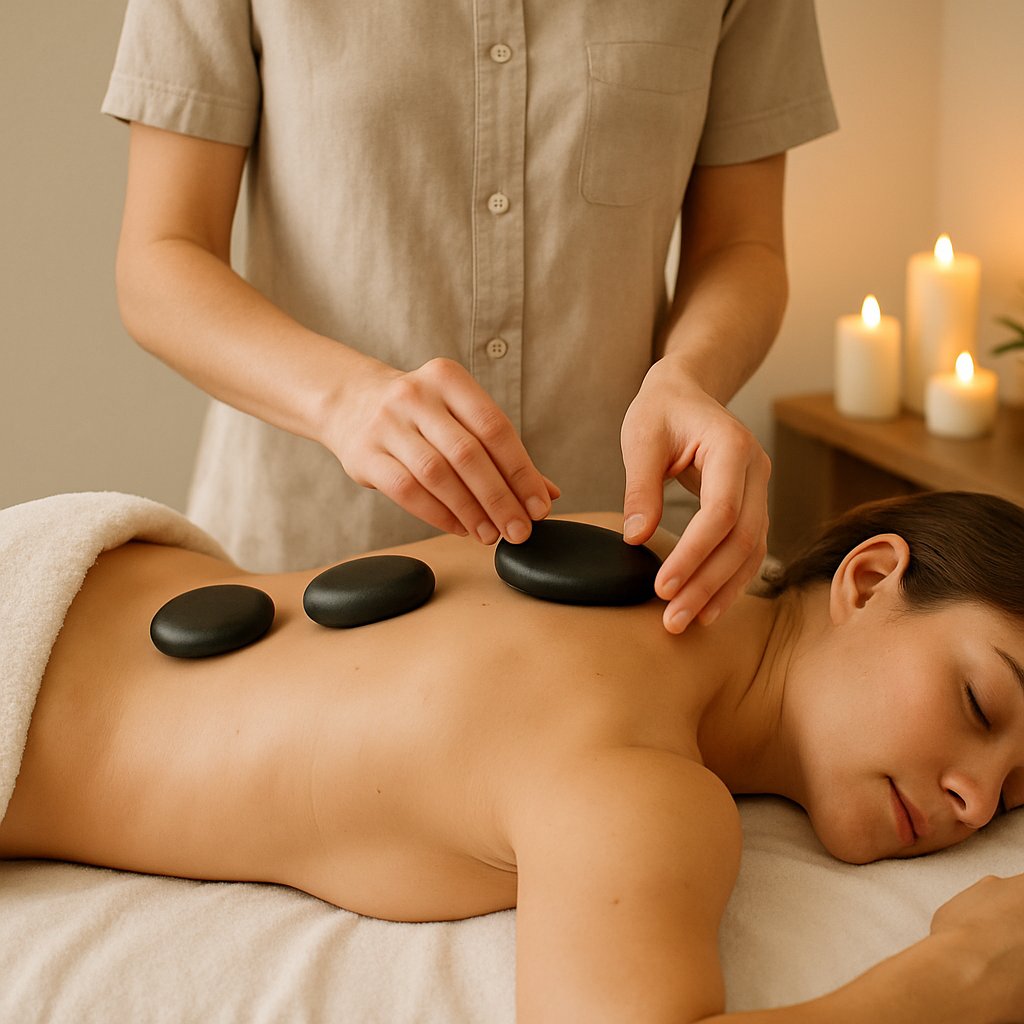
Hands-on bodywork reaches tension you cannot stretch out yourself. Our massage therapy services include therapeutic massage and hot stone work, delivered by certified therapists who adjust pressure and focus to what your body is actually holding.
- Pressure. Tell your therapist at the first check-in if pressure is too light or too deep. Therapeutic pressure should feel like productive discomfort, never sharp pain.
- Timing. Many people book after a demanding workday or on a day off rather than squeezing a session between meetings, because the benefit comes partly from the unhurried transition afterward.
Watch out: skip bodywork and see a clinician instead if you have an active skin infection, a fever, a recent injury that has not been evaluated, or a bleeding disorder, and tell your therapist about pregnancy, recent surgery, or medications that affect bleeding before the session begins.
Stacking Them Without Overloading Your Week
These three practices combine well because they use different channels. A realistic week might be: a ten-minute walk outside three days, a five-minute desk stretch daily, and one bodywork session. That is far more sustainable than a daily hour-long routine that collapses by week two.
If you are choosing only one to start, pick the one that addresses your most persistent symptom: restlessness responds best to movement, mental fatigue to nature, and stubborn physical tension to bodywork.
An Evening Relaxation Routine That Helps You Unwind
An evening relaxation routine is a short, repeatable sequence that tells your body the day is over, and it matters more than most people expect, because sleep is where stress recovery actually happens. It does not need to be elaborate.
Try this sequence:
- Dim the lights an hour before bed and put screens away.
- Take a warm bath or soak your feet for ten to fifteen minutes.
- Do a few minutes of slow breathing or a short guided meditation.
- Write down tomorrow's tasks so your mind has somewhere to put them.
- Keep the room cool and dark, and go to bed at roughly the same time.
Choosing Rituals by Stress Level, Measuring Progress, and Staying Consistent
Match the ritual to the stress, not to your ambition. On a mildly tense day, five minutes of paced breathing is enough.
Measuring progress is straightforward if you keep it simple.
Consistency beats intensity every time. Anchor each ritual to something you already do, keep a shortened version for bad days, and treat a missed day as a missed day rather than a failed routine.
When Self-Care Is Not Enough
Self-care is not enough when tension persists despite weeks of consistent practice, when it interferes with sleep or work, or when pain is sharp, radiating, or accompanied by numbness or weakness. Those signs call for a medical evaluation, not another ritual.
For the middle ground, where self-care helps but never quite clears the tension, professional bodywork is often the missing piece. Our article on whether luxury massage therapy is worth it for stress lays out what to expect and how to judge the difference for yourself.
Booking Your First Restorative Session at Gifted Hands Day Spa
Your first session should start with a conversation, not a treatment menu.
It is to give your body enough uninterrupted time to actually let go.
If you are ready to schedule, or you just want to ask what would suit your situation, our contact page has everything you need to reach us.
Most people do not need a longer list of stress relief ideas.
Frequently Asked Questions
What are holistic wellness rituals for stress relief?
They are repeatable practices that address stress through several channels at once rather than one: breathing, movement, mindfulness, touch, and environment. Examples include paced breathing before a meeting, a short walk outdoors, journaling at night, and professional massage. The point is not any single ritual but a small set you repeat often enough that your body starts to expect the calm. Most people see the biggest difference from consistency, not intensity.
What daily rituals can help reduce stress?
A workable daily stress relief routine usually has three anchors: a morning check-in of two to five minutes of slow breathing, a midday reset such as a short walk or shoulder release, and an evening wind-down that lowers light and stimulation. Keep each one short enough that you will actually do it on a bad day. Ten minutes total beats a sixty-minute plan you abandon by Thursday.
Which breathing exercises can help with stress?
Slow paced breathing is the most accessible starting point. Try inhaling through your nose for a count of four, holding for four, and exhaling for six to eight, for about two minutes. Longer exhales tend to feel more settling than longer inhales. The 4-7-8 pattern is a popular variation. If you feel lightheaded, shorten the counts and return to normal breathing. Stop entirely if you have a respiratory condition and check with your doctor first.
Can guided meditation for beginners actually reduce stress?
Guided meditation gives you a voice to follow, which removes the hardest part for beginners: wondering whether you are doing it right. Five to ten minutes with a free audio track is enough to start. Sit upright, let your shoulders drop, and return your attention to the guidance each time it wanders. Expect a busy mind, not a blank one. The practice is the returning, not the silence.
How long should a daily stress-relief ritual take?
Shorter than most people assume. Two minutes of breathing, a ten-minute walk, and a fifteen-minute evening wind-down is a realistic full day. Tying each ritual to something you already do, like your morning coffee or brushing your teeth, can help it stick. If a ritual consistently feels like a chore, cut it in half rather than dropping it.
When should I seek professional help for ongoing stress?
If stress is disrupting sleep, appetite, or work for more than a few weeks, or if you notice persistent low mood, panic, or hopelessness, talk to a licensed healthcare provider. Self-care rituals support well-being but are not a treatment for anxiety disorders, depression, or chronic pain conditions. Bodywork and spa treatments work well alongside professional care, not as a substitute for it.