 how-to
Customized Facials for Sensitive Skin: A Complete Guide
Table of Contents
- What Customized Facials Can Do for Sensitive Skin
- How Skin Assessment and Consultation Shape Your Treatment
- A Gentle Facial for Sensitive Skin: What Makes It Different
- Sensitive Skin Facial Ingredients to Avoid and Why
- What to Expect During a Customized Facial
- How Often to Get a Facial for Sensitive Skin
- Preparing for Your Facial and Caring for Your Skin After
- When to Postpone a Facial or Seek Medical Advice
- Frequently Asked Questions
Last Updated: October 14, 2026
What Customized Facials Can Do for Sensitive Skin
Customized facials sensitive skin are professional treatments that address reactive, irritated, or fragile skin without triggering inflammation. Unlike standard facials that apply the same routine to every client, a customized facial adapts every step, cleanser, mask, treatment duration, to your skin's unique needs.
At Gifted Hands Day Spa, we know sensitive skin requires more than gentle products, it requires a personalized approach. The real value of a customized facial lies in the assessment and adjustment before and during treatment: your esthetician evaluates your skin, asks about past reactions, and modifies the facial in real time.
Many people with reactive skin avoid facials after bad experiences, redness for days, a triggered breakout. These outcomes don't reflect what's possible when a treatment is truly tailored. A properly customized facial can hydrate dry, sensitive skin, calm redness and inflammation, and strengthen your barrier without irritation, provided it starts with a thorough consultation and respects your skin's threshold.
How Skin Assessment and Consultation Shape Your Treatment
The consultation is where a customized facial begins. Before any product touches your face, your esthetician should ask detailed questions about your skin history, current concerns, and past reactions, a thorough assessment takes time.
A proper assessment covers: how your skin feels (tight, oily, combination), past allergic reactions to ingredients or products, diagnosed conditions like rosacea, eczema, or acne, your current home routine, whether previous facials caused sensitivity, and any active dermatologist treatments.
Your esthetician should also visually and tactilely assess texture, redness, hydration, and barrier integrity, and may patch-test a small amount of product on a discreet area to identify irritants before committing to a full facial.
The consultation shapes every decision that follows. Fragrance sensitivity means fragrance-free products; past reactions to exfoliants mean minimal or no exfoliation; a compromised barrier makes hydration and repair the focus rather than actives. This personalization separates a customized facial from a standard one.
Ask your esthetician to explain their assessment process and what they observe about your skin. A skilled professional will share their findings and explain how those findings will shape your specific treatment plan.
A Gentle Facial for Sensitive Skin: What Makes It Different
A gentle facial for sensitive skin differs fundamentally from a standard facial. The most obvious difference is the omission or major reduction of exfoliation: standard facials use mechanical or chemical exfoliation to promote cell turnover, but for sensitive skin this can trigger irritation, redness, and barrier damage. A gentle facial skips exfoliation or uses only a very light enzymatic exfoliant or soft brush with minimal pressure.
Cleansing differs too: a creamy, hydrating cleanser replaces foaming or astringent formulas, removing makeup and impurities without stripping skin. Warm water, not hot, is used, since heat can trigger sensitivity and inflammation.
The mask step focuses on soothing and hydration rather than purifying. Where a standard facial uses clay to draw out impurities, a sensitive skin facial uses hydrating, cooling, or barrier-repair masks, the goal is to calm, not extract.
Application techniques shift as well: lighter pressure, gentler and shorter massage, no vigorous movements, and a slower overall pace that calms both skin and nervous system.
Sensitive Skin Facial Ingredients to Avoid and Why
Certain ingredients are common triggers for sensitive skin. Understanding which ones to avoid helps you communicate clearly with your esthetician and make informed choices about at-home skincare.
Fragrance is one of the most common irritants. Synthetic fragrance and natural essential oils alike can trigger sensitivity, redness, and contact dermatitis. "Natural" doesn't mean safe, lavender, eucalyptus, and citrus oils are potent irritants.
Alcohol (especially denatured) is drying and irritating, stripping the barrier and increasing sensitivity over time. Avoid products listing it among the first few ingredients.
Strong acids like glycolic and salicylic acid dissolve the bonds between skin cells, causing irritation, redness, and barrier damage in sensitive skin.
Retinoids (retinol and prescription tretinoin) are powerful but trigger irritation, peeling, and sensitivity in reactive skin. They're typically avoided in sensitive-skin facials unless your skin is already acclimated.
Benzoyl peroxide fights acne but is irritating and drying; for acne-prone sensitive skin, gentler alternatives like azelaic acid may be better.
Sulfates strip skin and trigger sensitivity; sulfate-free cleansers are gentler.
Your esthetician should review ingredients with you and explain product choices. If you know you react to specific ingredients, share that clearly.
What to Expect During a Customized Facial
A customized facial for sensitive skin typically follows this general flow, though your specific experience will be adjusted based on your skin's response.
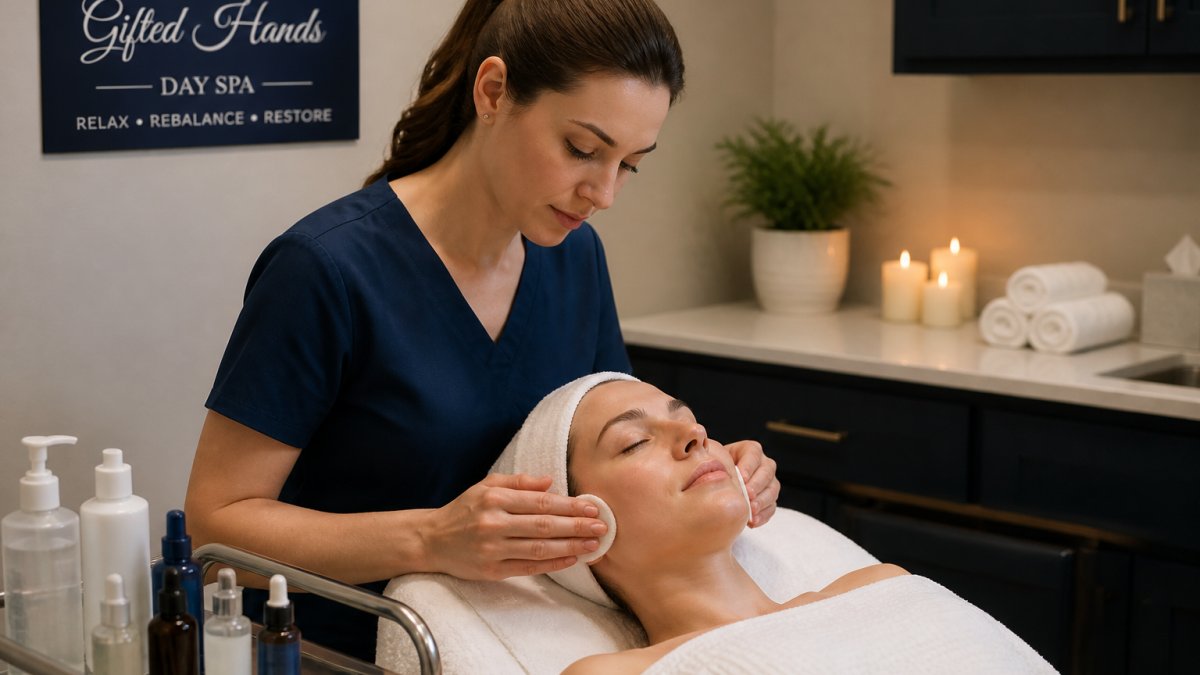
Your esthetician begins with a gentle, hydrating cleanser suited to your skin type, using lukewarm water and light pressure to remove makeup, sunscreen, and surface impurities without harsh rubbing.
Next comes assessment and massage: a light hydrating toner or essence plus a gentle facial massage that boosts circulation and relaxation. The massage is slower and lighter than in standard facials.
If exfoliation is included, it's minimal, a soft enzyme powder in a hydrating base applied gently for a minute or two, or skipped entirely for very reactive skin.
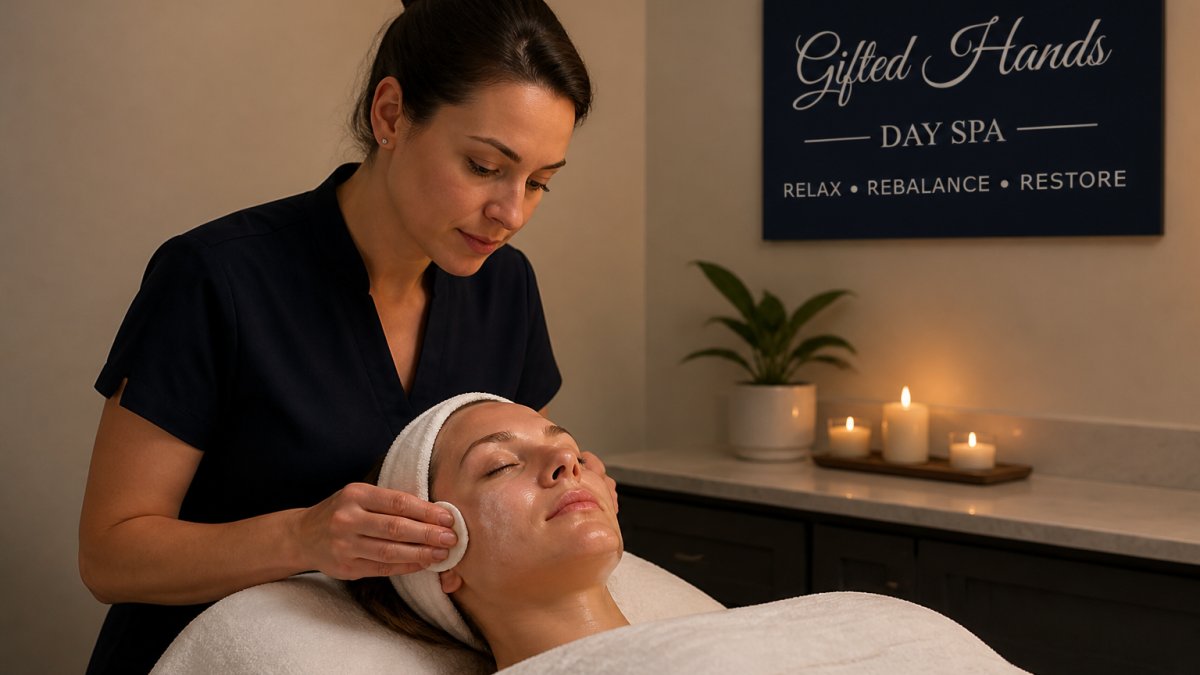
The treatment mask or serum comes next: typically a hydrating, soothing, or barrier-repair mask, applied evenly and left 10-15 minutes. Many spas use cooling masks or a cool compress to calm redness.
After removal, your esthetician applies a hydrating serum and moisturizer suited to your skin, plus possibly a calming eye cream and lip balm. Very reactive skin may get a minimal routine instead.
The facial typically lasts 50-60 minutes, intentionally slower than a standard facial so your skin can respond without shock or irritation.
How Often to Get a Facial for Sensitive Skin
Facial frequency depends on your skin's condition, goals, and response, there's no universal rule.
Many people with sensitive skin benefit from a facial every 4-6 weeks, allowing recovery between treatments while supporting hydration, barrier health, and rejuvenation. Very reactive or compromised skin may do better at 6-8 week intervals.
For a specific concern like a rosacea flare or dehydration, your esthetician might recommend closer treatments (every 2-3 weeks) for 2-3 months, then spacing them out as skin improves.
Listen to your skin: irritation lasting days afterward means treatments are too frequent or need adjustment, while skin that feels great for a week or two before turning dull or tight may benefit from more frequent facials.
At-home skincare matters just as much: a consistent, gentle routine supports skin between facials and extends results. Your esthetician should guide your home products based on your specific sensitivities.
Preparing for Your Facial and Caring for Your Skin After
How you prepare for a customized facial and how you care for your skin afterward both influence your results and your comfort.
Before your facial: Avoid new skincare products for at least a week. Mention active treatments like retinoids or prescription acne medications during your consultation, your esthetician may recommend pausing them briefly or adjusting your treatment.
After your facial: Skin is more permeable, so hydrating and soothing products work better, but irritating ones penetrate more deeply too. Stick to your gentle routine and only esthetician-recommended products for 24-48 hours, avoiding exfoliants, actives, and new products. Avoid hot water, saunas, and intense exercise for at least 24 hours, stay hydrated, and moisturize more frequently if skin feels tight or dry.
Most people see results immediately after a facial, skin looks more hydrated and feels smoother. These results continue to improve over the next few days as your skin fully absorbs the hydrating and soothing ingredients. Redness or minor sensitivity is normal for a few hours after a facial, but it should resolve quickly.
When to Postpone a Facial or Seek Medical Advice
Not every time is the right time for a facial. Certain skin conditions or circumstances mean you should postpone or consult a dermatologist first.
Postpone a facial if:
- Your skin is actively broken out with open lesions or pustules. A facial can spread bacteria and worsen acne.
- You have open cuts, scrapes, or wounds on your face.
- You're experiencing a severe flare of rosacea, eczema, or dermatitis. Wait until the acute inflammation subsides.
- You've recently had a chemical peel, laser treatment, or other professional skin procedure. Your skin needs time to recover.
- You're sunburned. Your skin barrier is already compromised.
- You're taking isotretinoin (Accutane) or have recently completed a course. This medication makes skin extremely sensitive and fragile.
Seek medical advice before a facial if:
- You have an active skin infection (bacterial, fungal, or viral).
- You have a diagnosis like severe rosacea, severe eczema, or other inflammatory skin conditions, and you're unsure whether a facial is appropriate.
- You're pregnant and unsure whether certain ingredients or techniques are safe. Some ingredients are best avoided during pregnancy.
- You're on prescription medications that affect skin sensitivity or healing (like blood thinners or immunosuppressants).
- You've had a severe allergic reaction to skincare in the past.
A dermatologist can confirm whether a customized facial is appropriate for your specific skin condition and can recommend timing or modifications if needed. At Gifted Hands Day Spa, we always recommend consulting your dermatologist if you have any concerns about whether a facial is right for you.
If during your facial your skin feels unusually irritated or you experience burning, stinging, or swelling, speak up immediately. Your esthetician can stop the treatment, rinse your face, and apply a soothing treatment. Mild redness or warmth is normal, but intense discomfort is not.
Customized facials for sensitive skin can be deeply nourishing and calming when they're truly personalized to your skin's needs. The difference between a treatment that irritates and one that soothes comes down to thorough assessment, honest communication, and skilled adjustment. At Gifted Hands Day Spa, we take time to understand your skin, explain our approach, and modify your treatment in real time based on how your skin responds.
| Preparation & Aftercare Step | Timing | Purpose |
|---|---|---|
| Avoid new products | 1 week before | Prevent unexpected reactions |
| Skip exfoliation | 24 hours before | Reduce barrier stress |
| Arrive with clean face | Day of | Maximize treatment efficacy |
| Apply moisturizer frequently | 24-48 hours after | Support hydration and healing |
| Use gentle products only | 24-48 hours after | Protect sensitized skin |
| Apply sunscreen daily | Ongoing | Prevent sun damage and sensitivity |
Frequently Asked Questions
Are customized facials actually good for sensitive skin?
Yes, when performed by a trained esthetician who screens your skin first. A customized facial adapts each step, cleansing strength, products used, massage pressure, and treatment time, to your specific sensitivities. The key is honest communication about your skin history, current reactions, and any conditions like rosacea or reactive skin. A professional will patch-test new products and adjust on the spot if irritation appears.
What should I tell my esthetician before a facial if I have sensitive skin?
Mention any diagnosed skin conditions (rosacea, eczema, dermatitis), recent reactions to products, active inflammation or open sores, medications affecting skin sensitivity, and specific triggers (fragrance, heat, certain ingredients). Be honest about past facial experiences, if one caused redness or burning, describe exactly what happened. This information lets your esthetician skip problematic steps and choose appropriate products from the start.
How long should you wait between facials if you have sensitive skin?
Sensitive skin typically tolerates facials every 4-6 weeks, compared to every 3-4 weeks for resilient skin. Your esthetician may recommend starting with one facial, observing how your skin responds over 2-3 weeks, then scheduling the next one. If irritation lingers beyond a few days or your barrier feels compromised, wait longer. Consistency matters more than frequency, regular gentle facials often calm skin better than sporadic intensive treatments.
Which ingredients should sensitive skin avoid in a facial?
Common irritants include strong acids (high-concentration glycolic or salicylic acid), fragrance, essential oils, alcohol, sulfates, and aggressive physical exfoliants. Sensitive skin often tolerates gentle options like lactic acid, chamomile, aloe vera, and hyaluronic acid better. Ask your esthetician about every product before application. If you have known allergies or reactions, bring a list of safe ingredients or products you've used successfully.