 how-to
How to Get Professional Waxing for Sensitive Skin Types
Last Updated: October 30, 2026
Quick Summary
Professional waxing for sensitive skin types relies on low-temperature hard wax with a short, fragrance-free ingredient list, since hard wax grips hair rather than skin. Preparation matters too: pause retinoids and exfoliating acids for three to five days before your appointment and skip exfoliation the morning of your wax.
- Most sensitive skin reactions trace back to three causes: wax that is too hot, repeated passes over the same spot, and product chemistry such as rosin or fragrance.
- Hard wax is the better default for sensitive skin because it grips hair primarily, while soft wax adheres to skin as well and carries higher irritation risk.
- Stop shaving at least two weeks before your appointment so hair reaches the right length for waxing.
- Ask for a patch test on a discreet area such as the inner forearm before any full-area waxing if you have reacted before.
- Mild redness and warmth for a few hours is normal, but welting, hives, blistering, or pain that worsens after 24 hours is not.
Table of Contents
- Why Sensitive Skin Reacts to Waxing (and What Actually Helps)
- The Best Wax for Sensitive Skin: What to Look For
- Hard Wax vs. Soft Wax for Sensitive Skin
- How to Prepare for a Wax When Your Skin Is Reactive
- What Happens During a Professional Waxing Appointment
- Waxing Aftercare for Sensitive Skin
- When to Postpone Waxing: Medications, Skin Conditions, and Reactions
- Booking Your Sensitive Skin Waxing Appointment
- Frequently Asked Questions
Why Sensitive Skin Reacts to Waxing (and What Actually Helps)
Professional waxing for sensitive skin types starts with understanding why reactive skin flares in the first place. Waxing pulls hair from the root, and that brief trauma disrupts the skin barrier. On sensitive skin, the barrier is already thinner and less resilient, so the same strip that leaves one client mildly pink can leave another red and stinging for hours.
Screening a client's skin before the first strip goes down matters more than any product claim on a jar.
The Three Things That Trigger Most Reactions
Most reactions trace back to three causes, not to "bad skin."
- Heat: Wax that is too hot burns before it ever grips hair. Temperature control is the single biggest factor in comfort.
- Friction and repeated passes: Going over the same spot again and again lifts live skin cells along with hair.
- Product chemistry: Rosin, fragrance, and some preservatives in soft wax trigger contact irritation on reactive skin.
Remove those three triggers and most "sensitive skin" waxing complaints disappear. That is the whole game.
The Best Wax for Sensitive Skin: What to Look For
The best wax for sensitive skin is a low-temperature hard wax with a short, simple ingredient list and no added fragrance. Hard wax grips the hair itself rather than the skin, so it lifts less live tissue and irritates the barrier less.
When you read a label, look for these signals:
- Hypoallergenic formula with few ingredients, not a long list of botanicals
- No fragrance or essential oils, which are common irritants
- Rosin-free options if you have reacted to soft wax before
Fine facial hair and coarse bikini hair need different grip, and forcing one product onto both is how skin gets angry.
Hard Wax vs. Soft Wax for Sensitive Skin
Hard wax is the better default for sensitive skin. Soft wax, also called strip wax, is applied thin and removed with a cloth strip. It is fast and efficient on large areas, but it adheres to skin as well as hair, which raises irritation risk.
Hard wax is applied thicker, sets on its own, and is peeled off without a strip. It grabs hair and leaves skin alone. The trade-off is speed: hard wax takes longer per area.
| Feature | Hard Wax | Soft Wax |
|---|---|---|
| Removal method | Peeled by hand, no strip | Cloth strip |
| Skin contact | Grips hair primarily | Grips hair and skin |
| Best for | Sensitive skin, bikini, face | Large areas, fine hair |
| Irritation risk | Lower | Higher |
| Speed | Slower | Faster |
Where Each Wax Works Best on the Body
Hard wax suits the bikini and Brazilian area, underarms, and the face, where skin is thin and nerve endings are dense. Soft wax works well on legs and arms when skin is not reactive, because the larger surface makes speed worth it. If your legs sting with soft wax, ask for hard wax there too.
How to Prepare for a Wax When Your Skin Is Reactive
Preparation is where clients give away half their comfort. How to prepare for a wax comes down to a few rules in the days before your appointment.
- Stop shaving for at least two weeks so hair reaches the right length
- Skip retinoids, acids, and exfoliating scrubs for three to five days before
- Avoid sun exposure and tanning beds on the treatment area
Watch out: Exfoliating the morning of your wax feels productive and is one of the most common causes of over-sensitized skin. Save exfoliation for several days after, once redness has fully cleared.
What Happens During a Professional Waxing Appointment
A professional appointment begins with a skin assessment, not a strip of wax. Your esthetician checks the area for irritation, recent sun exposure, and any active breakouts, then confirms your medication history and last wax date.
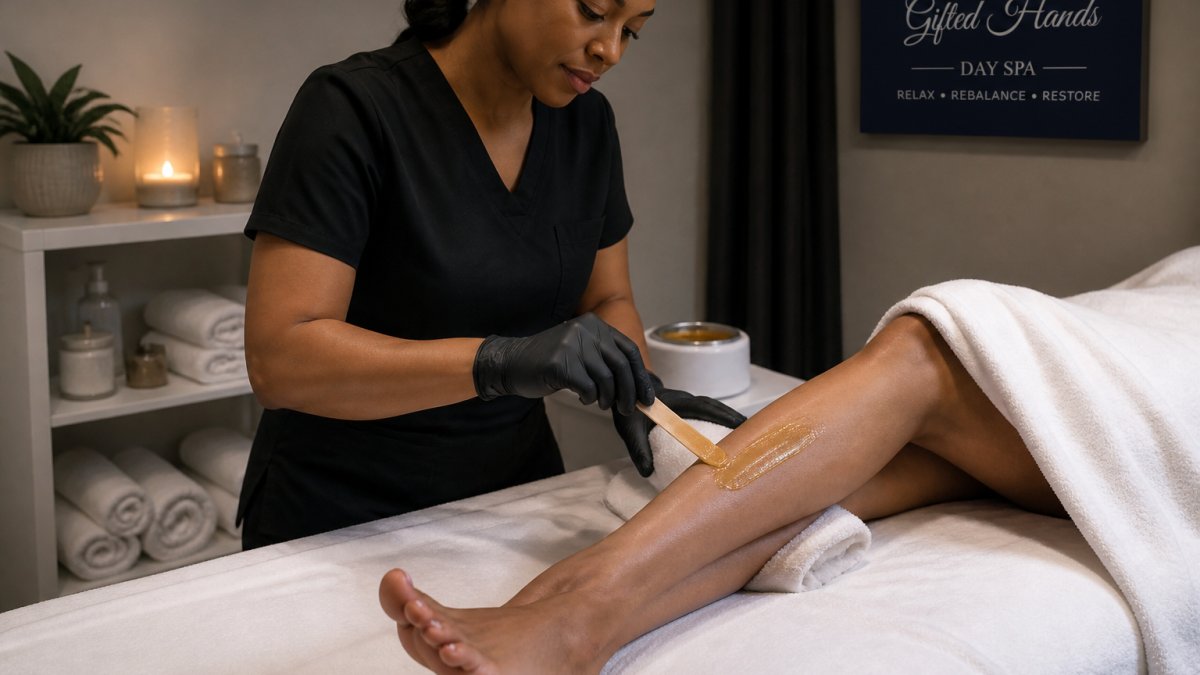
Here is what a safe, sensitive-skin service should look and feel like, step by step:
- Consultation and patch test. Before any full-area waxing, your esthetician should review your skin history, medications, and past reactions, then offer a small test patch on a discreet area such as the inner forearm or a coin-sized spot near the treatment site. A patch test is not a guarantee, but it gives you both a read on how your skin responds to that specific wax. Ask for one if you have reacted before or are trying a new formula.
- Cleansing and drying. The area is cleansed with a gentle, fragrance-free cleanser and patted fully dry. Moisture under wax prevents grip and encourages re-passes, which is exactly what sensitive skin does not need.
- Temperature check. Wax should be tested on the inner wrist or a small patch before it touches a larger area. It should feel warm, never hot. If it stings on contact, say so before the first pull.
- Application in the direction of hair growth. Wax is applied in thin, even sections in the direction the hair grows. Your esthetician should work in small zones, not slather a large area at once, so each pull is controlled.
- Removal with supported skin. The skin is held taut and the wax is removed with one firm, clean pull against the direction of hair growth. Repeating passes over the same spot is a red flag on reactive skin.
- No double-dipping. A fresh applicator or a clean section of wax is used each time. Double-dipping is a hygiene issue and a common client concern; a professional will not do it.
- Soothing post-wax product. A fragrance-free soothing gel, lotion, or cold compress is applied to calm the barrier.
- Aftercare review before you leave. It is helpful to ask your esthetician to walk you through what to avoid for the next 24 hours and what a normal reaction looks like.
An experienced waxer works in small sections, keeps the room calm, and checks in with you between pulls. If you want to see how waxing fits alongside our other treatments, you can review our spa services before you book.
Bikini and Brazilian Waxing on Sensitive Skin
Bikini and Brazilian waxing on sensitive skin is the area clients worry about most, and rightly so. The skin is thin, the hair is coarse, and the nerve endings are close to the surface.
Ask for a patch test on a small area if you have reacted before. Expect some redness and tenderness for a few hours. That is normal inflammation, not a sign something went wrong.
Waxing Aftercare for Sensitive Skin
Waxing aftercare for sensitive skin is simple, and most people overdo it. The goal is to calm the skin barrier, not to attack it.
- Keep the area cool and loose-covered for the first 24 hours
- Skip hot baths, saunas, and intense workouts for a day
- Avoid scented lotions, and use a fragrance-free moisturizer instead
Moisturizing matters more than most people think. Well-hydrated skin sheds dead skin cells normally, which lowers the risk of ingrown hairs and keeps waxing results smoother for longer.
When to Postpone Waxing: Medications, Skin Conditions, and Reactions
Some skin should not be waxed today, and knowing when to postpone protects you. The reason is mechanical: waxing removes the top layer of dead cells along with hair, and skin that is already compromised or thinned cannot tolerate that pull. On sensitive skin, the margin for error is smaller, so screening matters more.
Medications and Topicals That Raise Risk
Tell your esthetician about every medication and topical you use, including over-the-counter products. This is not paperwork. It changes what we recommend.
- Prescription retinoids (such as tretinoin) and isotretinoin (Accutane) thin the skin and can cause waxing to lift live skin, leading to burns or tearing. Practitioners commonly advise waiting several days after stopping a topical retinoid and longer after isotretinoin; follow your prescriber's guidance.
- Over-the-counter retinols and exfoliating acids (glycolic, salicylic, lactic) increase sensitivity. A common recommendation is to pause them for three to five days before a wax.
- Blood thinners and some supplements can increase bleeding and bruising at the follicle. Mention them so your esthetician can adjust technique.
Skin Conditions and Situations That Call for a Wait
- Active eczema or psoriasis flares in the treatment area
- Cold sores, warts, or any broken, cracked, or infected skin
- Sunburn or recent heavy sun exposure or tanning-bed use
If you have a chronic skin condition such as eczema, rosacea, or acne-prone skin, a patch test and a conversation with your esthetician before a full service is the safer path. When in doubt about a medication or condition, check with your clinician first.
How to Tell a Normal Reaction From a Real One
Mild redness and warmth for a few hours is expected. That is normal inflammation from the pull, not a sign something went wrong. What is not normal:
- Welting, hives, or a spreading rash, possible allergic reaction
- Blistering or burns, possible heat or technique injury
- Pain that gets worse after 24 hours rather than better
If your skin is reactive beyond waxing, our guide to customized facials for sensitive skin explains the screening steps and soothing ingredients we use, and it pairs well with a waxing plan.
Booking Your Sensitive Skin Waxing Appointment
Booking is the easy part. What matters is telling us your skin history when you call, so we can match the wax type, temperature, and technique to you before you arrive.
You can see our full waxing services and book directly, or reach out with questions through our contact page. Our certified estheticians handle appointments, and we are happy to discuss a patch test and consultation when your skin needs it.
Frequently Asked Questions
Is hard wax or soft wax better for sensitive skin?
Hard wax is usually the safer pick for sensitive skin. It grips the hair without sticking to live skin, so it lifts off with less pulling and typically causes less redness. Soft wax requires a cloth strip, which tugs at the skin barrier more. For the bikini, underarms, and face, hard wax is the standard choice. Soft wax still works for larger areas like legs if your skin tolerates it, but ask for a patch test first.
How should I prepare for professional waxing if I have sensitive skin?
Let hair grow to about a quarter inch, roughly two to three weeks of growth, so the wax can grip it. Gently exfoliate two days before, not the day of. Skip retinoids, acids, and strong exfoliants for at least a week. Avoid caffeine and alcohol a few hours before if you are pain-sensitive, and wear loose clothing. Tell your esthetician about any medications or skin conditions during the consultation so they can adjust the wax and temperature.
How long does redness last after waxing sensitive skin?
Most redness settles within a few hours, and lingering pinkness usually fades within 24 hours. Sensitive skin can stay flushed a bit longer. Apply a cool compress and a fragrance-free moisturizer, and skip heat, tight clothing, and workouts for the rest of the day. If redness spreads, swells, or lasts more than two days, that is worth a call to your esthetician or a doctor rather than something to wait out.
Can I get waxed if I have eczema or rosacea?
Sometimes, but timing and technique matter. Waxing over an active eczema flare or a rosacea breakout can make inflammation worse. Wait until the skin is calm and not broken, and tell your esthetician about your condition upfront. They can use a gentler hard wax, control the temperature, and work in smaller sections. A patch test on a small area a few days ahead is the safest way to confirm your skin will tolerate it.
Sensitive skin does not have to mean giving up smooth results. It means choosing the right wax, the right preparation, and a licensed professional who adjusts to your skin instead of running the same routine on everyone. Gifted Hands Day Spa offers professional waxing with hard wax options, skin assessments before every appointment, and certified estheticians who tailor each treatment to your skin type. Get started with Gifted Hands Day Spa and book a waxing appointment built around your skin.