 blog
Swedish Massage vs Deep Tissue Massage: Which One to Book
Last Updated: November 28, 2026
Quick Summary
Swedish massage uses light, flowing strokes to relax the whole body, while deep tissue massage applies firm, targeted pressure to specific areas of chronic tension. Choose Swedish massage for relaxation, stress relief, or a first massage, and deep tissue for stubborn knots or long-lasting tension in one area.
- Swedish pressure typically rates 3-5 on a 1-10 scale; deep tissue commonly runs 6-8.
- Deep tissue sessions last 50-90 minutes; Swedish full-body sessions run 50-60 minutes.
- Deep tissue may cause soreness for a day or two; Swedish soreness is rare.
- Start with Swedish if it's your first massage, then progress to deep tissue.
- Ask whether your therapist is trained in both styles so the session can adapt.
Table of Contents
- Swedish Massage vs Deep Tissue Massage: The Core Difference
- Side-by-Side Comparison: Pressure, Purpose, and Price
- What Swedish Massage Does Best
- What Deep Tissue Massage Does Best
- Can Swedish Massage Remove Knots?
- Swedish vs Deep Tissue vs Sports Massage
- Swedish vs Deep Tissue vs Therapeutic Massage
- Which Massage Is Right for You? A Decision Guide
- Frequently Asked Questions
Swedish Massage vs Deep Tissue Massage: The Core Difference
The core difference between Swedish massage vs deep tissue massage comes down to pressure and intent: Swedish massage uses light, flowing strokes to relax the whole body, while deep tissue massage applies firm, targeted pressure to specific areas of chronic tension. Booking the right style matters, because the wrong choice is the fastest way to leave disappointed.
Swedish massage is a relaxation-focused technique built on long gliding strokes, kneading, and gentle circular movements across superficial muscles. Deep tissue massage is a therapeutic technique that uses slower, firmer pressure to reach deeper muscle layers and connective tissue. Both belong to the same family of massage therapy, but they serve different treatment goals.
Here's what most guides get wrong: they frame this as a simple "gentle versus hard" choice. It isn't. The real question is what you want the session to accomplish, and that answer changes everything about which one you book.
Side-by-Side Comparison: Pressure, Purpose, and Price
The two styles diverge most clearly on pressure, purpose, pacing, and what a session actually feels like. The table below summarizes how a typical Swedish session compares with a deep tissue session, including the practical details most comparisons leave out.
| Factor | Swedish Massage | Deep Tissue Massage |
|---|---|---|
| Pressure level | Light to firm, flowing; often described on a 1-10 scale as a 3-5 | Firm to targeted; commonly a 6-8, adjusted to your feedback |
| Primary purpose | Relaxation and stress relief | Muscle tension and pain relief |
| Techniques | Long gliding strokes (effleurage), kneading (petrissage), percussion, and gentle circular movements | Slow friction, sustained finger or forearm pressure, trigger-point work, and cross-fiber strokes |
| Muscles worked | Superficial muscles and fascia | Deep muscle layers, connective tissue, and areas of chronic guarding |
| Pace | Rhythmic and continuous, covering the whole body | Slower and more focused, often spending several minutes on one area |
| Sensation during | Gentle, calming, and easy to drift off during | Focused and sometimes intense; a "productive discomfort" rather than sharp pain |
| Post-session soreness | Rare | Possible for a day or two, similar to post-exercise soreness |
| Best for | Overall wellness, circulation, stress, first-time guests | Knots, chronic tension, injury recovery, and athletes |
| Typical session length | 50-60 minutes for a full body | 50-90 minutes, depending on how many areas are treated |
Pricing depends on session length and the specific treatment you choose. For current prices, visit the Gifted Hands Day Spa website or contact us for a quote.
A useful way to read the table is to focus on the pace and sensation rows. Swedish massage keeps a steady rhythm across the whole body; deep tissue slows down and concentrates. That single difference explains most of the other rows, from soreness to session length.
Watch out: a therapist who advertises "deep tissue" but never checks in during the session is a red flag. Productive deep tissue work requires feedback, and a good therapist will ask about pressure within the first few minutes and again as they move to sensitive areas.
What Swedish Massage Does Best
Swedish massage is well suited to whole-body relaxation and stress relief, and it is a common choice for first-time guests who want to unwind.
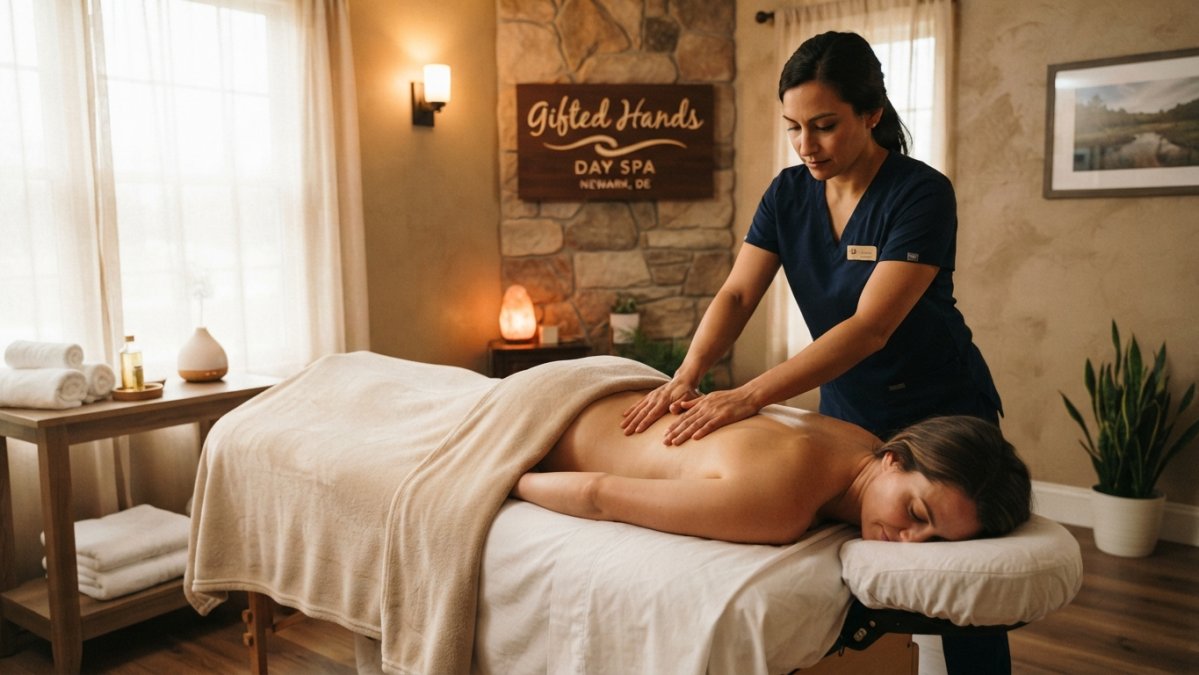
The long gliding strokes move in the direction of the heart, supporting circulation and helping the body settle. Kneading and circular movements work superficial muscles without digging in. If your goal is a quiet hour away from a demanding week, this is the style that delivers it.
Regularly received, Swedish massage can help keep the body from tightening further, which may suit desk-bound professionals.
What Deep Tissue Massage Does Best
Deep tissue massage is generally used for localized discomfort such as stubborn knots, trigger points, chronic tension in the neck and shoulders, and muscle soreness after hard training. The therapist uses slow strokes and sustained pressure to reach deeper muscle layers and connective tissue.
This is not a "harder Swedish massage." The pace is slower, the contact is more focused, and the therapist often works within a smaller area for longer. Communication matters more here, because pressure that feels productive and pressure that feels like too much can be hard to tell apart in the moment.
A common mistake is booking deep tissue for a first-ever massage. If you don't yet know how your body responds to bodywork, start with Swedish and ask for firmer pressure in the spots that need it. You can always progress.
Can Swedish Massage Remove Knots?
Swedish massage can ease the tightness around a knot, while sustained deep tissue pressure is typically the approach used for deeper adhesions. Knots are areas of contracted muscle fiber and fascial tension, and reaching them usually requires slower, more targeted work.
That doesn't make Swedish massage useless for tension. It reduces the surrounding muscle guarding that makes a knot feel worse, and regular sessions help prevent new ones from forming. If a specific spot has been sore for weeks, though, deep tissue is the more direct route. For a closer look at which techniques actually release deep muscle knots, read our guide on the best massage for deep muscle knots.
Swedish vs Deep Tissue vs Sports Massage
Sports massage sits between the two in intent: it borrows deep tissue's targeted pressure but aims it at performance, recovery, and injury prevention around training. Swedish massage is aimed at relaxing the whole body, while deep tissue is aimed at chronic tension.
For athletes and active people, the practical split looks like this:
- Swedish after a stressful week, when sleep and stress relief are the goal
- Deep tissue for a stubborn shoulder or lower-back knot that has lingered
- Sports massage before an event or during a heavy training block
Many people rotate between styles across the year rather than committing to one, which is a sensible approach.
Swedish vs Deep Tissue vs Therapeutic Massage
Therapeutic massage is the umbrella term, not a third competing style. It describes any massage delivered with a clinical or treatment goal in mind, and both Swedish and deep tissue can be therapeutic depending on how the therapist applies them.
This is where the labels start to blur. A skilled massage therapist may blend gentle strokes with targeted pressure on the areas that need it. Describing your symptoms and pressure preference helps the session fit your needs.
When you book, it can help to ask whether a therapist is trained in both styles, since that affects how a session can adapt if your body asks for something different.
Which Massage Is Right for You? A Decision Guide
Choose Swedish massage if your goal is relaxation, stress relief, or general wellness, and deep tissue if you're chasing relief from a specific area of chronic tension or muscle soreness. Use the guide below to match the style to your situation, then read the safety notes before you book.
Choose Swedish massage if:
- It's your first massage and you want to know what to expect
- Your tension is broad and stress-driven rather than pinpointed
- You want to sleep better and feel calmer afterward
- You have a health condition that makes firmer pressure risky and want to confirm with your clinician first
Choose deep tissue massage if:
- One area, like your neck, shoulders, or lower back, has been tight for weeks
- You train hard and want focused recovery work
- You prefer firm pressure and can communicate when it's too much
- You've had massage before and know how your body responds
Consider a combined approach if you want relaxation and targeted work in the same appointment. Many therapists blend the two: Swedish strokes for the full body, then deep tissue pressure on the areas that need it. It can help to ask when you book whether a therapist is trained in both.
Safety and contraindications. Massage is generally low-risk, but some situations call for a clinician's clearance first. Talk to your doctor before booking if you have a bleeding disorder or take blood thinners, have a history of blood clots or deep vein thrombosis, are pregnant, have had recent surgery, have an acute injury, or have a skin infection or open wound in the area to be treated. Deep tissue pressure in particular should be avoided over areas of active inflammation or injury until a clinician says otherwise. Neither style replaces medical care for persistent pain, numbness, or weakness.
How to communicate during a session. Sharp, shooting, or numbing pain is a signal to speak up immediately. Useful phrases include: "A little less here," "More pressure there," "That's the right spot, hold it," and "Can we skip that area today?" Good therapists generally welcome this feedback and adjust without judgment. If you leave a deep tissue session with bruising or pain that lasts more than a few days, mention it to the therapist and consider a gentler approach next time.
What to expect afterward. Swedish massage often leaves people relaxed. Deep tissue may leave you feeling looser but slightly sore for a day or two, similar to post-exercise soreness. Drink water, move gently, and avoid scheduling deep tissue immediately before a demanding event.
If you've settled on a style and want to see the full menu, you can explore our massage therapy services in Newark and Bear. Wondering how to pick the right practitioner once you've chosen a technique? Our guide on how to choose a massage therapist walks through credentials and questions to ask. Ready to schedule? Book a professional massage and see how to prepare, choose your session length, and verify credentials before you arrive. You can also contact our team with any questions about which treatment fits your needs.
Not sure whether your shoulders need relaxation or focused deep tissue work? Gifted Hands Day Spa pairs every guest with certified massage therapists who assess your tension and customize the session around your goals, using techniques from gentle Swedish strokes to targeted deep tissue pressure in a calm, intentional setting. Get started with Gifted Hands Day Spa and book the massage that actually matches what your body is asking for.
Frequently Asked Questions
What is the main difference between Swedish and deep tissue massage?
Swedish massage uses light-to-medium pressure with long gliding strokes, kneading, and circular movements to relax superficial muscles and improve circulation. Deep tissue massage applies firm, targeted pressure to deeper muscle layers and connective tissue, often focusing on specific areas of chronic tension. Swedish is generally chosen for stress relief and overall wellness, while deep tissue suits localized discomfort, knots, and recovery. Many therapists blend both within one session based on your treatment goals and pressure preference.
Is deep tissue massage more painful than Swedish massage?
Deep tissue can feel more intense because it works deeper muscle layers and trigger points, but it should never be painful. Expect firm pressure and possible moments of focused discomfort in tight spots. Mild post-massage soreness for a day or two is common after deep tissue. Swedish massage stays in a gentler range throughout. With either style, tell your massage therapist if pressure feels too strong so they can adjust in real time.
Can Swedish massage remove knots?
Swedish massage can ease muscle tension and help knots feel softer by increasing circulation and relaxing superficial muscles, but it rarely releases deep adhesions in one session. For stubborn knots, a deep tissue approach or a blend of both styles usually works better. Knots tied to chronic tension often need repeat sessions and consistent pressure. A massage therapist can assess your tissue and suggest a technique.
Can you ask for lighter pressure during a deep tissue massage?
Yes. Deep tissue describes the technique and target tissue, not a fixed pain level. You can request lighter pressure at any point, and a skilled therapist will adjust without abandoning the deeper work. Speak up early rather than tensing through discomfort, since bracing your muscles works against the treatment. Clear communication about pressure preference is part of a personalized treatment plan and makes the session more effective.